Beyond Rio: The Phenomenon of Flamengo's Widespread Support
Clube de Regatas do Flamengo isn't just a football club; it's a national phenomenon, a sporting titan whose influence far transcends the sun-drenched beaches and bustling streets of Rio de Janeiro. While many clubs boast passionate local followings, Flamengo stands alone in its unparalleled geographic reach and demographic diversity. The question of "Why Flamengo?" for millions living hundreds, sometimes thousands, of kilometers from its spiritual home, is a sociological puzzle that delves deep into Brazil's cultural fabric. It's a question that challenges conventional wisdom about sports fandom and team identity.
The Unparalleled Reach of Flamengo's Support Across Brazil
The statistics alone paint a picture of extraordinary dominance. Flamengo reportedly commands a fanbase that is five to ten times larger than nearly every other major club in Brazil, with only Corinthians offering a comparable, albeit still smaller, national footprint. The club's influence is starkly evident in regions far from Rio. In the vast Northeast, Flamengo's support often eclipses the combined fanbase of all local clubs, a testament to its overwhelming popularity. Similarly, in Minas Gerais, a state with its own fiercely proud and traditional clubs like Atlético-MG and Cruzeiro, Flamengo often draws near-equal, if not sometimes greater, support in many areas.
Even in the traditionally rivalrous South, the Rubro-Negro's presence is undeniable. Flamengo is considered the third most popular club in Rio Grande do Sul and boasts more supporters in Paraná than any other team. In states like Bahia, the number of Flamengo faithful often surpasses those of local giants. This widespread appeal shatters the simplistic notion of Flamengo as merely the "people's team." Their fanbase is remarkably diverse, encompassing individuals from all socio-economic strata – the rich, the poor, the middle class, and indeed, every demographic in between. The idea that being a Flamengo fan requires a direct cultural connection to Rio, or embodying the "malandro" stereotype often associated with the city, is challenged by the sheer volume and diversity of its supporters nationwide. This geographical paradox – the logic of cheering for a Rio-based club while living in Salvador or Porto Alegre – lies at the heart of the Flamengo phenomenon. For a deeper dive into this national dominance, explore
Flamengo's Unrivaled Fanbase: Unpacking Its National Dominance.
Unpacking the Historical and Cultural Roots
Understanding Flamengo's enduring appeal requires looking beyond the immediate successes, especially since the club's most prolific winning periods, particularly in the modern era, are relatively recent. Unlike European giants whose long periods of continuous dominance cemented their international appeal, Brazilian football in the famed 1980s was much more balanced, with various clubs competing for top honors. This suggests that sustained victory alone isn't the primary driver for Flamengo's initial and long-term national growth.
One prevalent theory points to the historical dominance of Rio de Janeiro's cultural institutions. For decades, Rádio Globo, based in Rio, was a pervasive media force, beaming match commentaries and sports news across the vast Brazilian interior. This exposure would have disproportionately favored Flamengo, giving it a head start in capturing the hearts and minds of listeners in distant towns where local football coverage was scarce or non-existent. This theory posits that long before the internet or widespread television, the airwaves created a profound connection, forging an identity that transcended physical proximity. The image of the "malandro," often associated with Rio and at times stereotypically linked to Flamengo, is frequently cited. However, for millions of fans outside Rio, this stereotype hardly reflects their own identity or connection to the club. Their support stems from a different kind of cultural resonance, often passed down through generations, shaped by media influence, and a yearning for a universally recognized symbol of Brazilian football prowess.
The Modern Era and the "2019 Effect": Beyond Immediate Victories
While historical factors laid the groundwork, the resurgence of Flamengo in recent years, particularly around the watershed year of 2019, undoubtedly injected new vigor into its already massive fanbase. The period saw an unprecedented wave of titles, including the Copa Libertadores and the Brasileiro Série A in the same year, captivating a nation hungry for success. This modern golden era provided a potent narrative of triumph and excellence, drawing in a new generation of supporters.
However, it's crucial to acknowledge that success alone does not guarantee such an explosion in popularity. Other Brazilian clubs have enjoyed periods of significant dominance without achieving a fraction of Flamengo's national appeal. São Paulo, a multi-time world and Brazilian champion, and Palmeiras, a dominant force in the Libertadores, did not see their fanbases grow proportionally. Similarly, Cruzeiro's domestic dominance in the early 2010s, or Fluminense's back-to-back Brazilian titles, added relatively few new supporters in comparison. This highlights that Flamengo possesses an inherent, almost mystical, quality that amplifies the impact of its victories far beyond what logic might predict.
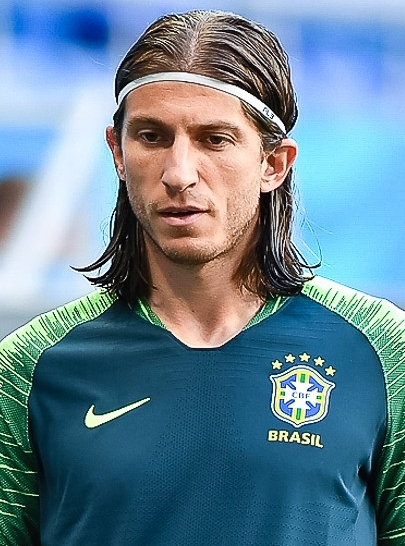
The modern era of Flamengo has also been defined by attracting world-class talent, players who embody professionalism and a winning mentality. Take for instance, the impact of players like
Filipe Luís. Joining Flamengo after a stellar career at European giants like Atlético Madrid and Chelsea,
Filipe Luís brought not just exceptional defensive skills but also invaluable leadership and tactical intelligence. His decision to return to Brazil and choose Flamengo, foregoing further European opportunities, was a powerful statement. He quickly became a cornerstone of the 2019 squad, epitomizing the club's ambition and commitment to excellence. For fans across Brazil,
Filipe Luís represented a new breed of Flamengo player – globally experienced, articulate, and fiercely professional. His contributions on the field, combined with his thoughtful interviews and commanding presence, helped solidify Flamengo's image as a serious, well-managed club with global aspirations. He became an icon who transcended regional loyalties, inspiring admiration not just for his play but for his character and leadership, thereby reinforcing the national appeal of Flamengo.
The Enduring Mystery and Fan Identification
The enduring question for many remains: what is the cultural relationship that non-Rio residents have with a team like Flamengo? If not proximity, nor simple stereotype, nor even consistent historical dominance, what forges such a powerful bond? The answers are complex and multifaceted. For some, it might be a family legacy, a tradition passed down through generations who themselves were influenced by the reach of Rádio Globo. For others, it could be the sheer spectacle of Flamengo, a team that often plays with flair and passion, providing a sense of excitement and entertainment that captivates an entire nation.
There's also an element of national pride. Flamengo, by virtue of its massive following, often feels like "Brazil's team" in a way no other club does. Supporting Flamengo can be an act of aligning with a widely recognized symbol of Brazilian football identity, a way to participate in a grander narrative. Furthermore, the club's marketing, even before it was formally strategized, effectively positioned Flamengo as a team that belongs to everyone, everywhere. Figures like
Filipe Luís significantly contribute to this narrative. His professional background and articulate demeanor offered a sophisticated, aspirational face to the club, attracting fans who might not identify with older stereotypes but are drawn to competence, success, and intelligent football. His presence helped broaden the definition of what a Flamengo player – and therefore, a Flamengo fan – could be, moving beyond any singular cultural archetype. This evolution of fan identity, adapting to modern heroes and varied appeals, is a fascinating aspect of the phenomenon, which you can read more about in
Why Millions Across Brazil Adopt Flamengo: A Fan Identity Deep Dive.
In conclusion, Flamengo's widespread support is a unique sociological marvel, defying easy categorization. It's a testament to a confluence of historical media influence, an innate ability to connect emotionally with diverse populations, and a strategic evolution that has embraced modern success and star players like
Filipe Luís. The club represents not just a football team from Rio, but a powerful national identity, a shared passion that unites millions across Brazil's vast expanse, making "Beyond Rio" not just a description, but the very essence of the Flamengo phenomenon.